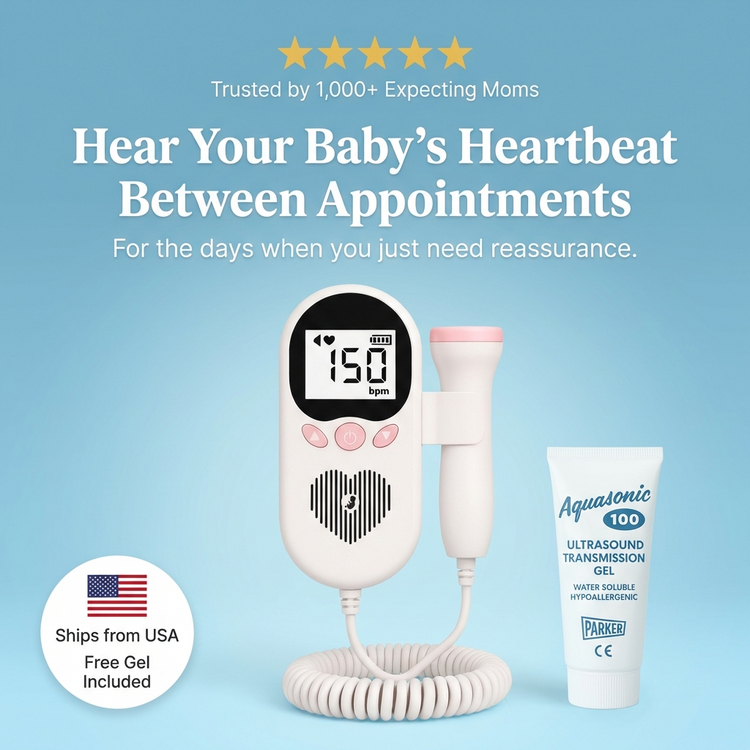
During pregnancy, the health and well-being of the unborn child are paramount concerns for expectant parents and healthcare providers alike. As medical technology advances, tools like the fetal Doppler have become integral to prenatal care, offering a non-invasive way to monitor the baby’s heart rate and providing reassurance throughout the pregnancy. This article delves into the role of fetal Dopplers in pregnancy care, their benefits, and considerations for their use.
What is a Fetal Doppler?
A fetal Doppler is a handheld ultrasound device used by healthcare professionals to listen to an unborn baby’s heartbeat. It works by emitting sound waves that bounce off the baby’s heart and return to the device, allowing the heartbeat to be heard through a speaker.
Benefits of Using a Fetal Doppler
Fetal Dopplers offer several advantages:
- Reassurance: Hearing the baby’s heartbeat can provide peace of mind to parents, especially between doctor visits.
- Early Detection: It can help in the early detection of potential issues, allowing for timely medical intervention.
- Bonding Experience: Listening to the baby’s heartbeat can be a bonding experience for the entire family.
How to Use a Fetal Doppler Safely
While fetal Dopplers are generally safe, they should be used responsibly:
- Consultation: Always consult with a healthcare provider before using a fetal Doppler at home.
- Limit Use: Limit usage to avoid unnecessary exposure to ultrasound waves.
- Follow Instructions: Adhere to the manufacturer’s guidelines for proper usage.
When to Use a Fetal Doppler
Fetal Dopplers are typically used from the second trimester onward, as the baby’s heartbeat is more easily detectable. However, healthcare providers may use them earlier for specific medical reasons.
Considerations and Limitations
While fetal Dopplers are helpful, they have limitations:
- Not a Substitute: They are not a substitute for regular prenatal care and ultrasounds.
- Potential for Misinterpretation: Without professional training, interpreting the sounds can lead to unnecessary anxiety.
- Device Quality: Ensure the device is of high quality for accurate readings.
The Role of Healthcare Providers
Healthcare providers play a critical role in the effective use of fetal Dopplers:
- Guidance: Provide guidance on the appropriate use of fetal Dopplers.
- Education: Educate parents on what to expect when using the device.
- Support: Offer support in interpreting the results to avoid undue stress.
Future of Fetal Doppler Technology
With continuous advancements in technology, Fetal Doppler for Pregnancy Monitoring is expected to become more sophisticated, offering enhanced features for better accuracy and ease of use. The integration with mobile applications is already paving the way for real-time monitoring and data sharing with healthcare providers.
In conclusion, while fetal Dopplers are a valuable tool in pregnancy care, they should be used wisely and in conjunction with regular medical advice. As technology evolves, these devices will likely become even more integral to prenatal care, providing insights that were once only available in clinical settings.
About the Author


